
Spantik
Golden Peak
The Golden Peak — where serious mountaineering careers begin.
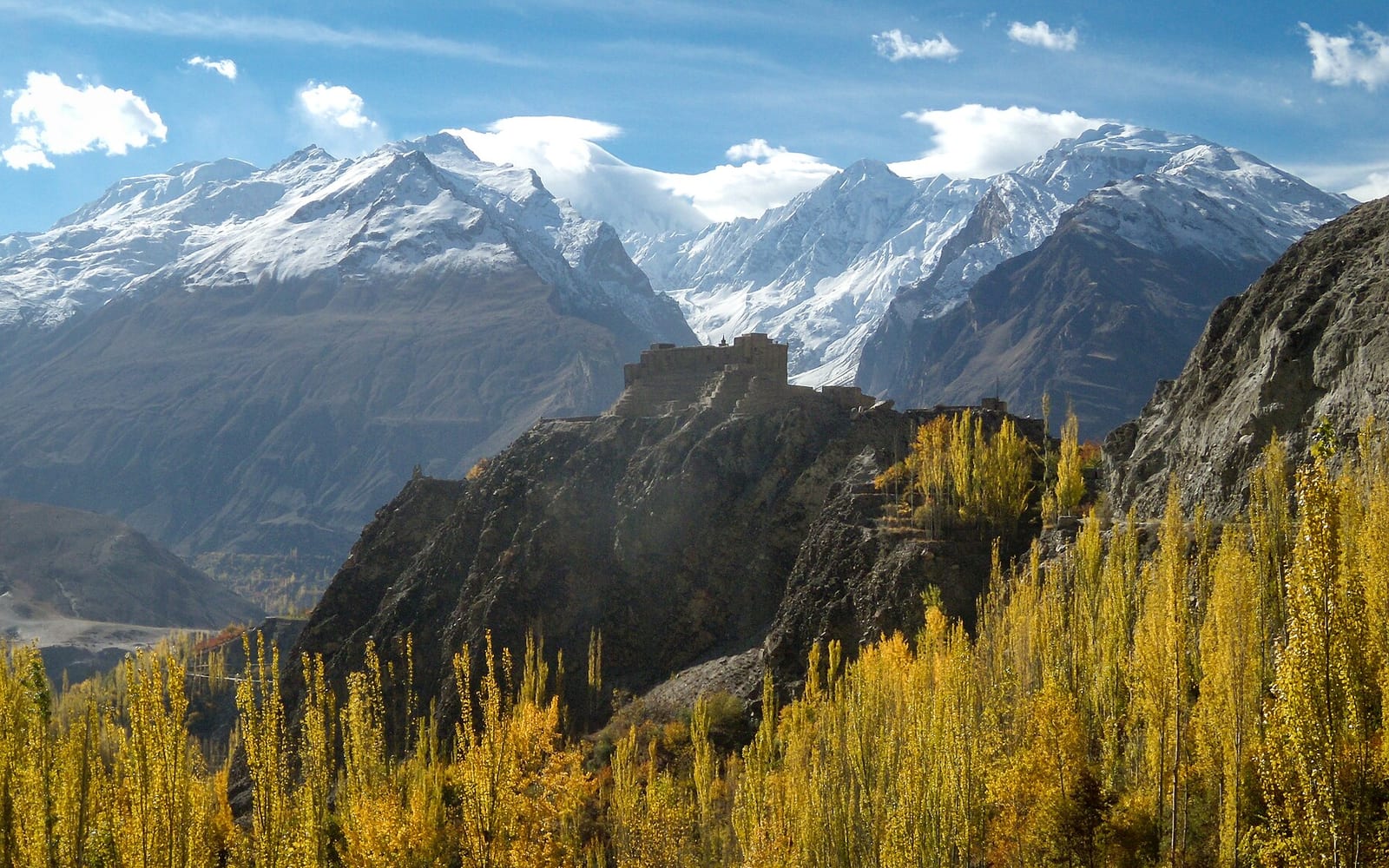
Spantik (7,027 m) — Golden Peak — is the Karakoram's benchmark first-7,000er: a long but technically moderate southeast ridge that lets fit trekkers graduate into genuine high-altitude mountaineering, with success rates the 8,000ers never allow. Its marble 'Golden Pillar' is the sunset glow visible from Hunza's Eagle's Nest, and expeditions stage from Arandu village up the Chogo Lungma.
| Elevation | 7,027 m / 23,054 ft |
| World rank | The Karakoram's classic first-7,000er |
| Range | Karakoram (Spantik-Sosbun Mountains) |
| First ascent | 1955 — German (Karl Kramer) expedition |
| Where it stands | Above the Chogo Lungma glacier, Nagar/Shigar — its 'Golden Pillar' glows at sunset from Hunza's viewpoints. |
Every climbing culture needs its gateway mountain; Pakistan's is Spantik. The standard route asks for crampon competence, three weeks and honest fitness rather than elite technique — which is why it anchors our expedition desk's progression: trek Concordia one year, climb Spantik the next, aim at GII after.
The mountain's second identity belongs to hard climbing history: the northwest 'Golden Pillar' — 2,000 m of marble — gave Mick Fowler and Victor Saunders their 1987 masterpiece, still cited among the finest alpine routes ever established.
Questions, answered
Is Spantik good for a first expedition?
It's the region's standard answer: moderate technical demands, a real 7,000 m summit, three-week timeframe and staging villages that have supported expeditions for decades. Prior crampon experience plus strong trekking fitness qualifies most candidates.